Late 2027: The New Target for Tesla's Optimus Robot Deliveries
Tesla has pushed its external robot launch to the end of next year, citing persistent challenges with the machine's hands, durability, and artificial intelligence.
By Mykola Bondarenko ·
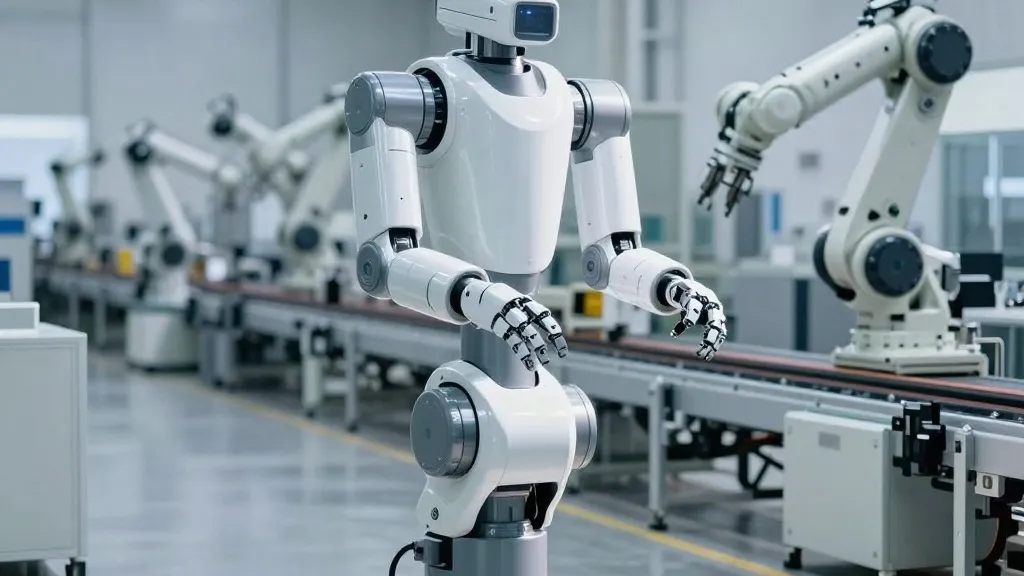
The timeline for Tesla’s humanoid robot, Optimus, has shifted again. On the company’s Q3 2026 earnings call, CEO Elon Musk announced that deliveries to outside customers will not begin until the end of 2027. This delay is driven by three stubborn technical hurdles: the robot’s hands, its overall durability, and the reliability of its artificial intelligence. These are not new problems; they represent the central struggle facing every major player in the humanoid robotics sector today.
Musk confirmed that early production of Optimus has commenced on Tesla’s high-volume line in Fremont, California, the same facility that previously manufactured Model S and Model X vehicles. While the majority of the assembly line designed to handle one million robots annually is already installed, Musk acknowledged that reaching that capacity will take at least another year, possibly longer. The primary reason for the slow ramp-up is that significant portions of the design are still in flux. He expects the core engineering issues to be resolved by the end of next year, at which point Tesla plans to begin shipping units to external industrial clients for dangerous, repetitive, or around-the-clock tasks.
During the call, a Tesla Optimus engineer identified the hand as one of the most difficult hardware components to finalize, alongside custom gears that still raise reliability concerns. Musk agreed that the hand is the primary obstacle. The engineering challenge is twofold: the fingers must be soft enough to manipulate delicate objects without crushing them, yet robust enough to withstand constant wear and tear. Unlike human skin, robot hands cannot heal, making material science a critical bottleneck.
On the software side, Tesla is still grappling with its AI architecture. A major difference between Optimus and Tesla’s fleet of cars is that the robots do not yet have a massive fleet generating real-world data for training. To compensate, the company plans to build between 10,000 and 20,000 robots and place them in an "Optimus Academy" where they will practice tasks extensively. Additionally, Tesla intends to integrate its AI5 chip into the robots around April 2027. Musk promised a video demonstration within one to two months showing Optimus performing unscripted tasks, a move designed to counter the common criticism that many humanoid demos rely on pre-programmed routines that fail in real-world conditions.
This latest update aligns with reporting from last month, which indicated that while Tesla had ramped production to hundreds of units per week, the robots struggled with generalizing to new tasks. Internal reports suggested that the hand and forearm assembly contained over 100 small parts assembled by hand, with touch sensors facing reliability issues. The AI was also noted to take days to learn basic tasks. In its Q3 shareholder letter, Tesla described the current batch from the Fremont line as its first "production-quality" bots, implying that previous units did not meet that standard.
The history of Optimus’s timeline is a pattern of slippage. In 2024, Musk projected internal use in 2025 and high-volume external production in 2026. By January 2025, he estimated the company would build 10,000 robots that year, with several thousand doing useful work by year-end, a prediction he later admitted was incorrect. Now, the target for external deliveries has settled on late 2027.
Musk claimed on the call that, to his knowledge, no other company is "even close" to Tesla in developing a general-purpose humanoid robot. However, competitors have made significant strides that challenge this assertion. XPeng, for instance, activated an automated production line for its IRON robot in Guangzhou in September, automating over 80% of core processes. XPeng’s IRON features hands with 21 degrees of freedom and runs on three in-house Turing chips. The company aims for mass production by the end of 2026 and deliveries in the first half of 2027, a timeline comparable to, or slightly ahead of, Tesla’s.
Boston Dynamics, a subsidiary of Hyundai, has also moved quickly. It began producing its electric Atlas robot in January and reports that all its 2026 deployments are committed, including a partnership with Google DeepMind for AI integration. In September, Boston Dynamics opened a training center at Hyundai’s Metaplant in Georgia, where Atlas is learning to sequence car parts. Hyundai plans to deploy 25,000 robots across its plants in the coming years. Notably, Boston Dynamics hired Milan Kovac, Tesla’s former head of Optimus, in January. While Boston Dynamics has taken a more pragmatic approach by prioritizing sturdy grippers over human-like dexterity, it is already deploying units in a car factory, offering a practical workaround to the hand-dexterity problem that is currently holding Tesla back.
Source: Electrek