Tesla Reveals Fighter-Jet-Inspired Cockpit for 2028 Roadster Debut
Tesla’s upcoming flagship Roadster features a fighter-jet-inspired cockpit that prioritizes vehicle telemetry over traditional navigation, with production slated for 2028.
By Juan Gonzalez ·
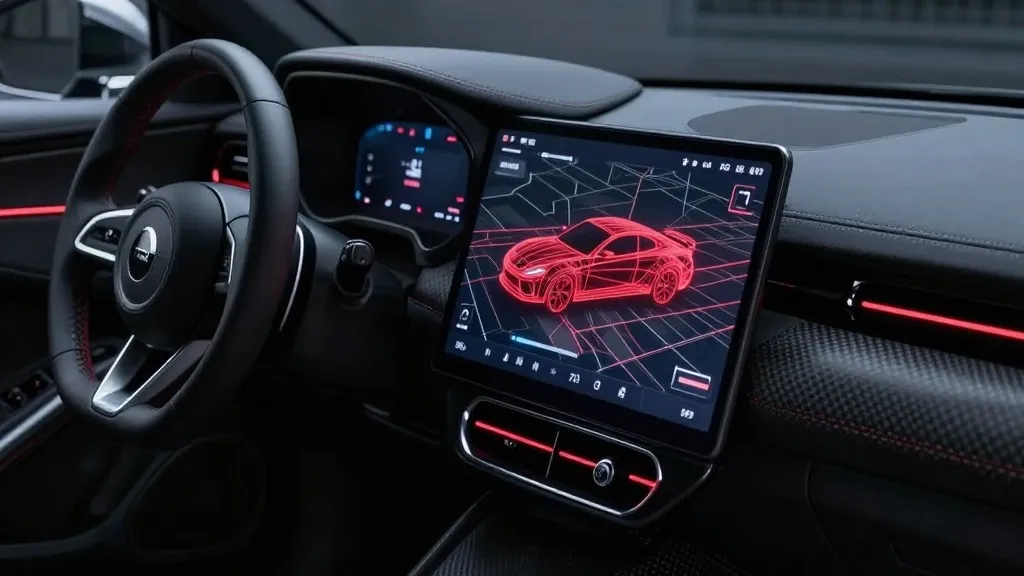
5,500 PSI. That is the pressure reading displayed on the status bar of the next-generation Tesla Roadster, a metric that highlights the vehicle’s reliance on high-performance hardware rather than just software optimization. The figure was revealed in a 34-second video released on Friday, providing the clearest view yet of the cockpit interface for a car that Tesla aims to bring to market in 2028. The display explicitly ties the digital experience to the physical thrusters that will define the vehicle’s performance capabilities.
The interface is designed with a distinct aviation aesthetic, departing from the map-centric layout found in Tesla’s current lineup. Instead of centering the navigation map, the home screen places a 3D wireframe of the vehicle at the center, flanked by a squared-off yoke. This design choice reflects Tesla’s stated intent to build an experience around the pilot. The bottom navigation bar includes tabs for Home, Vehicle, Listen, Climate, and Navigate, but the primary focus remains on the car’s mechanical status rather than its location.
A significant portion of the user interface is dedicated to Track Mode, which serves as the hub for performance data. The dashboard presents a live circuit map alongside detailed telemetry, including session lap times, brake and motor temperatures, and individual tire pressure and temperature readouts. This level of granular data allows drivers to monitor the vehicle’s mechanical health in real-time during high-speed operation. The system also provides controls for adjusting aero balance, brake balance, and stability settings, with options to switch traction and stability control off for maximum performance.
The software integrates directly with the vehicle’s aero and propulsion systems. Drivers can select from Auto, Low Drag, High Downforce, or Custom aero modes, which correspond to the active wing and suction systems that generate downforce. The interface also manages the charging process, displaying a charge limit bar alongside a compact music player. This integration ensures that the digital cockpit remains synchronized with the physical adjustments made to the car’s aerodynamic profile.
The hardware behind these digital readouts was showcased near Waco, Texas, in mid-October. The Thrust and Rocket versions of the Roadster utilize cold gas thrusters powered by carbon overwrapped pressure vessels. Tesla projects 0-to-60 mph acceleration times of under 0.9 seconds for the Thrust model and under 0.59 seconds for the Rocket variant. In contrast, the base Performance model relies on a fan and ground sealing system for grip, with its aero settings reflected in the on-screen controls for active wing management.
Market positioning for the Roadster is distinct within Tesla’s portfolio. The company has not indicated whether the Track Mode telemetry will be rolled out to other models, such as the Model 3 Performance. The Rocket version is designated as invite-only and is not yet approved for public road use, while the Thrust version is listed as a limited release. Reservations are currently open with a $50,000 payment, signaling a premium pricing strategy for the flagship vehicle.
Production is scheduled to begin in 2028, according to statements made by Elon Musk during the recent unveiling event. The interface shown in the video may undergo further changes before deliveries commence. For prospective buyers and enthusiasts, the physical vehicle will be on public display for the first time this weekend. The car is scheduled to be exhibited in the lobby of the Petersen Automotive Museum in Los Angeles from October 24 to 27, offering the market its first opportunity to inspect the hardware that supports the new digital cockpit.
Source: Teslarati